
The question desk
How PR Teams Make the Case for Long-Term Reputation Building

Long-term reputation can influence trust, referrals, conversions, and crisis readiness far beyond a single media mention. Experts in PR, marketing, and communications share practical ways to connect reputation efforts with measurable business results. From journalist relationships to customer proof, these strategies show how credibility becomes a lasting business asset.
§ How this was made
The perspectives in this article were written by the named contributors and submitted through Connectively. Connectively's automated system selected them and used AI to write the headline, introduction, section headings, summary sections, and illustration, and to make minor edits for clarity. Articles are assembled and published automatically. Report errors to corrections@connectively.us. How we make our content

Illustration generated with AI
What the experts said
25 on the record
- Track Credibility Signals and Pipeline ImpactFaizan Khan
- Follow Qualified Referral SignalsEric Turney
- Build Domain Authority for ConversionsZack Bowlby
- Share Personal Stories to Earn ReferralsFred Z. Poritsky
- Measure Confidence Through Operational SavingsJennifer Bagley
- Demonstrate Ethical Client CommitmentMichael Toebe
- Prioritize Relevant Trade PlacementsShoaib Mughal
- Use Relationship Scorecards for Early ProgressMark Bietz
- Build Reliable Sources for AI VisibilityChristopher Coussons
- Count Journalist Inquiries as Reputation ProofFahad Khan
- Reduce Borrower Uncertainty Before NeedDale Gremillion
- Invest in Influential Professional NetworksJustin Reese
- Connect Publicity With the Full FunnelTom Sullivan
- Rebook Creators Who Champion BrandsDennis Ksendzov
- Explain Claims Before EmergenciesDavid Eisbrouch
- Support Families Through Sustained PartnershipsMargaret Martens
- Teach Peers to Gain Negotiation LeverageAnthony Shapero
- Turn Reviews Into Reusable Customer ProofLuke Wherry
- Track Evidence Beyond ExposureLindsey Huettner
- Test AI Citations Before RenewalsDaniel Goh
- Align Community Causes With Customer ExperienceVaughn Smith
- Treat Quiet Connections as Crisis InsuranceShriya Mukherjee
- Find Value Beyond Click DashboardsJoseph Tannous
- Earn Reporter Loyalty Through CandorJonluke Davis
- Capture Authentic Moments for Lasting AuthorityJessalyn Arthur Taveras
Track Credibility Signals and Pipeline Impact
 Faizan KhanPR and Content Marketing Specialist · Ubuy Indonesia
With 8 years of experience in corporate communications, I decide which public relation activities deserve continued investment by asking whether they strengthen credibility with the audiences our buyers trust, even when the payoff is slow.
Our team once judged success by launch-day coverage, which brought 25 articles a year but few lasting conversations. We shifted toward an expert-source program, regularly briefing 12 healthcare reporters and offering clinicians for commentary.
To show value, we tracked three signals: repeat coverage, spokesperson requests, and the share of sales prospects who had already read about us. Within 12 months, total articles fell to 18, but repeat coverage grew from 3 to 16 stories, spokesperson requests rose from 4 to 21, and 34% of new prospects arrived already familiar with our brand. Sales cycles shortened by 12 days.
Lesson: Reputation compounds through repeated trust, so report relationship signals alongside pipeline impact to earn leadership's long-term support.
Follow Qualified Referral Signals
 Eric TurneyPresident / Sales and Marketing Director · The Monterey Company
I run sales and marketing at The Monterey Company, so I look at PR the same way I look at any other channel. I keep investing in the activities that show up somewhere I can track over time, like referral traffic from earned placements, links from niche sites our buyers already read, and lift in branded search. A single mention may not move much on its own, but if those signals keep building, the work is earning trust with the right audience.
The lesson that made the case for me is that one-off coverage fades fast, but relationships with the right outlets and writers keep paying off. A wire release can get a lot of pickups that nobody reads, while a real story placed with a niche publication can keep sending qualified visitors for months. As an owner, I care less about the size of the splash and more about whether it brings in people who end up becoming customers.
Build Domain Authority for Conversions
 Zack BowlbyCEO · ROI Amplified
Having managed over $100M in ad spend and scaled 200+ companies at ROI Amplified, I evaluate PR by how it strengthens search engine trust and organic authority over vanity buzz. I double down on PR initiatives that secure permanent pickups across authoritative news distribution channels to build high-trust, diverse backlink profiles.
The biggest lesson that proved the value of long-term relationship building is that brand authority directly accelerates bottom-funnel conversions. In a full-funnel overhaul for a personal injury law firm, pairing authoritative visibility with SEO and conversion rate optimization drove a 1,200% increase in organic traffic and a 67% lift in case intakes.
Cut the PR activities that only generate temporary spikes in mentions. Instead, fund the relationships and syndication channels that build compounding domain trust and feed your inbound conversion paths.
Share Personal Stories to Earn Referrals
 Fred Z. PoritskyChief Idea Consultant · FZP Digital
I decide on PR investments by checking whether an activity deepens direct connections with the exact clients I serve, like nonprofits and professional service firms, rather than chasing one-off mentions. My path from nonprofit finance into web design at age 60 gave me insight into how reputation grows through consistent personal trust instead of headlines.
One approach that has stuck with me is sharing the story of my own late-career shift and drumming background. That simple honesty opened conversations that turned into lasting client relationships and referrals, because people saw the same person behind the work.
The clearest lesson came when a talk about my background inspired someone else to make a career move they had been putting off. It showed me that real reputation compounds through those individual connections, so I keep funding efforts that create space for that kind of exchange over time.
Measure Confidence Through Operational Savings
 Jennifer BagleyCEO · CI Web Group
Running CI Web Group taught me something counterintuitive: the PR activities hardest to measure are often the ones doing the most structural work. Hosting and guesting on podcasts like The Catalyst for the Trades didn't spike lead dashboards, but it consistently put us in front of contractors who were already pre-sold on our credibility before they ever called.
The way I decide what stays funded is simple -- does this activity shorten the trust-building cycle with the right audience? If yes, it earns its keep even without clean attribution. When I launched JustStartAI, the community-building work felt invisible in the metrics for months, then suddenly our inbound conversations arrived already informed, already aligned. That compression in the sales cycle was the proof.
The lesson that made the case internally: I stopped defending relationship-building as a soft spend and started connecting it to operational costs. When a contractor already trusts you from a speaking session or a podcast appearance, you spend less time educating, less time overcoming objections, and less time recovering from early miscommunication. That's a real cost reduction, just one that lives in your ops numbers rather than your marketing report.
One thing I always tell business owners -- consistent reputation signals show up in your review sentiment and repeat engagement over time. Watch those signals alongside your PR calendar and you'll see the correlation without needing a perfect attribution model.
Demonstrate Ethical Client Commitment
 Michael ToebeStrategic advisor · Reputation Intelligence
There are certain approaches and processes that are more likely to give you a higher probability of a successful outcome - however you may define "improvement" or "success." You have to think and focus on "big picture" when the payoff requires it.
A helpful lesson is displaying credibility, exhibiting that you are committed to helping the client achieve what they want to achieve and being consistently about them and consistent in interactions. Ethically show them the way forward and competently, ethically help them move in that direction.
Prioritize Relevant Trade Placements
 Shoaib MughalFounder · Marketix Digital
One lesson from our research-led PR campaigns is that a valuable editorial placement doesn't always produce an immediate backlink or enquiry.
For example, industry coverage of Marketix Digital's Australian warehouse research included our findings without initially linking to the original report. Rather than treating the placement as a failure, we recognised its relevance to warehouse operators and decision-makers, then made a courteous request for a source citation.
I evaluate continued PR investment through audience relevance, accurate attribution, quality of coverage and opportunities for further journalist engagement, alongside links and measurable commercial outcomes.
A placement in a specialist publication reaching potential buyers can be more useful than several mentions on unrelated websites. The objective is to build credibility with the audiences that influence purchasing decisions, not simply accumulate coverage numbers.
Use Relationship Scorecards for Early Progress
 Mark BietzCMO · Halloween Costumes
We decide where to sustain public relations investment by using a relationship scorecard that tracks progress before final results appear. We look at response quality, follow-up speed, requests for more context, and whether contacts introduce us to their colleagues. These signs help us understand whether we are becoming a trusted resource rather than just another name in someone's inbox. They also show where our efforts are building stronger professional relationships.
Media coverage is valuable, but it is not the only sign of success. We continue investing when our efforts lead to more open conversations and reduce the need for repeated explanations. Over time, this makes communication more effective. Trusted contacts can also tell us when an idea needs more time, helping us save resources and make better decisions.
Build Reliable Sources for AI Visibility
 Christopher CoussonsDirector · Visionary Marketing
I keep investing in PR activity that builds a brand's presence in the places search engines and AI tools draw from, even when the coverage looks quiet. A single big placement is easy to report. A steady run of expert commentary in relevant trade titles is harder to show on a dashboard, but it is what keeps a brand visible when people, and now AI assistants, go looking for an answer.
The case for long-term work got easier to make once AI answers arrived. My research found that 78% of AI Overview citations come from sites already ranking in the organic top 10 (https://visionary-marketing.co.uk/blog/ai-overviews-traffic-impact-2026). Brands reach those rankings partly through the links and mentions that consistent PR earns, so the slow relationship work feeds directly into whether a brand appears when a buyer asks an AI tool for a recommendation.
What taught me to defend relationship building was watching campaigns that chased one-off coverage. They produced a good month and then nothing, because each pitch started from zero with journalists who had no reason to remember the brand. Work that kept going, answering requests every week and building a reputation as a reliable source, compounded instead. I now measure long-term PR on three things that move slowly but tell the truth: authority of the pages that matter, branded search volume, and how often the brand appears in AI answers for its core questions.
Count Journalist Inquiries as Reputation Proof
 Fahad KhanDigital Marketing Manager · Ubuy Peru
I continue to invest in activities that generate trust indicators if they give me leading indicators I can measure, despite the fact that reputation is hard to quantify. The indicator that I like best is inbound requests from journalists, as journalists only contact people that they trust.
The lesson that taught me how to convince them: we measured inbound requests in combination with placements for one year. Initially, we had 3 inbound requests per quarter. After we spent time doing background briefings without pitching to 20 reporters, our inbound requests became 19 per quarter. These placements cost us $420 per placement in staff time, whereas $1,350 for the cold-pitched ones. Also, 62% of the placements occurred in tier-one or trade media.
Leadership approved the budget and even increased it by 25%.
The lesson: if you cannot measure your reputation, just measure who contacts you.
Reduce Borrower Uncertainty Before Need
 Dale GremillionSenior Loan Officer · Native American Home Mortgage
I've spent over 25 years in residential lending, and I judge PR by whether it makes borrowers and referral partners trust us earlier in the process. Media coverage is nice, but I keep investing in activities that lead to better questions, cleaner applications, and people calling before they're in trouble.
One example is education around HUD 184, FHA, VA, USDA, and Conventional loans. A workshop or community conversation may not create an instant headline, but if it helps a first-time buyer understand options before they make an offer, that reputation value is real.
The lesson for me: long-term relationship building works when you stop "promoting" and start reducing uncertainty. In mortgage, people remember who explained the hard parts clearly before there was a commission on the line.
So I'd track signals like repeat referrals, past clients sending family members, Realtors asking you to review a scenario early, and borrowers coming in with more confidence. Those are reputation metrics, even if they don't fit neatly into a media report.
Invest in Influential Professional Networks
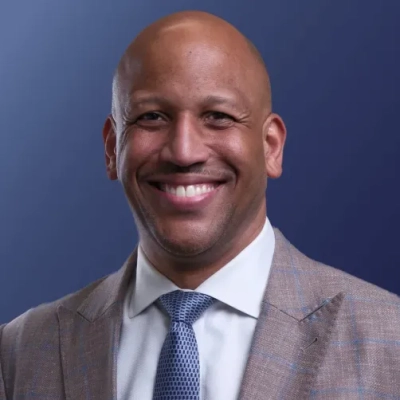 Justin ReeseOwner · J Reese Law Firm
I've navigated this question from an unusual angle -- practicing law, being on a Bravo television show, and building a litigation firm simultaneously. That combination forced me to think hard about which visibility actually converts into trust versus which just creates noise.
The clearest lesson came from my work in the Chinese Drywall MDL. The relationships I built with co-counsel, mediators, and community advocates during that years-long litigation paid dividends in referrals and credibility that no press mention ever matched. Nobody wrote about those handshakes -- but those relationships quietly built my reputation inside the plaintiff's bar in ways that outlasted any headline.
The practical filter I use: ask whether the activity puts me in a room with people who will remember me when someone they love gets hurt. My work with the National Bar Association's Executive Committee and the Thurgood Marshall Inn of Court passes that test. A one-time media segment usually doesn't.
The uncomfortable truth is that long-term relationship investment looks like a cost center until suddenly it isn't. The year I started showing up consistently for philanthropic work around literacy and healthcare access in underserved communities, referrals started coming from people I'd never formally pitched -- because reputation travels through trust networks, not press releases.
Connect Publicity With the Full Funnel
 Tom SullivanManaging Partner · ADvance Media
I've spent 20+ years marketing elective medical practices, where reputation is often the difference between a lead and a booked consult. I judge PR by whether it creates durable trust signals: third-party credibility, relevant backlinks, branded search lift, review activity, and better-quality inquiries.
A syndicated press release about a new procedure, award, or provider is worth continuing if it supports SEO and authority beyond the initial pickup. If it only creates a temporary "we got published" moment, I treat it as vanity.
The lesson that helped me make the long-term case: reputation compounds when PR is connected to the whole funnel. A media mention, strong review profile, and consistent social proof make ads, SEO, and consult conversion work better together.
The best relationship-building PR is not "please cover us." It's becoming a reliable source of useful, timely information so that when patients research you later, they find signals that reduce doubt.
Rebook Creators Who Champion Brands
 Dennis KsendzovSenior Influencer Partnership Manager · Influencer Advisory
I answer this from creator work rather than press work. To be honest, we're less of a performance agency, so we typically focus on longer ROAS horizons, like nine to 12 plus month attribution cycles. The question is, do you want to look at it on a longer term horizon and build brand value, or are you just focused on the immediate performance marketing? It just depends if you need quick cash flow or if you're trying to scale the business.
In our record of sponsored YouTube videos, we looked at the brands with 40 or more of them in the first half of 2025. The ones whose share of our record grew by half or more by the first half of 2026 got about 81% of their early 2025 videos from creators they booked more than once. Brands whose share fell by more than half got about 59%.
Money motivates creators only so far, and a creator who becomes a fan talks about you for years.
Explain Claims Before Emergencies
 David EisbrouchManaging Partner · Eisbrouch Marsh, LLC
Running a personal injury firm for 27+ years means I've had to make hard calls about where to put time and money when the return isn't immediately obvious. The clearest filter I've found: does this activity build trust with people before they ever need a lawyer?
For us, that meant consistently publishing plain-language content explaining things like how medical liens work, what delayed injury symptoms mean for your claim, or what actually happens during discovery. None of that drives immediate calls. But when someone gets rear-ended and starts Googling at midnight, they find us already acting like a resource rather than an ad.
The lesson that made the case internally was watching clients arrive having already read three of our blog posts. They came in informed, they trusted us faster, and those cases moved more smoothly. That's reputation working before the first handshake.
The hardest thing to accept is that you can't always trace a signed client back to a specific piece of content the way you can track a TV spot. But when someone tells you they chose you because your firm "actually explained things clearly," that's the relationship doing its job.
Support Families Through Sustained Partnerships
 Margaret MartensExecutive Director · Water Well Trust
In my role leading the Water Well Trust, I prioritize PR efforts that directly support families needing wells, because those create lasting reputation through real outcomes rather than one-off coverage.
For instance, our Hometown H2O partnership with the Chris Long Foundation and partners like Xylem has delivered ongoing installations across states, generating authentic stories from families who gained running water after years without it.
Those projects show how sustained collaboration builds credibility that quick mentions cannot match.
The key lesson came from following up with recipients over multiple years, where their renewed ability to garden, raise animals, and regain health turned into ongoing community trust that attracted more support and volunteers.
Teach Peers to Gain Negotiation Leverage
 Anthony ShaperoManaging Partner · Liss, Shapero & Mitnick
Managing a litigation firm for over 25 years, I decide which reputation-focused activities to fund by whether they build genuine authority within our legal community rather than chasing quick media hits.
For example, I consistently invest time in speaking at educational panels, such as the Michigan Association of Justice No Fault Seminars and ICLE trial programs. While you cannot measure immediate returns on teaching opening and closing arguments, it firmly establishes our firm as substantive authorities in complex litigation.
The key lesson came after transitioning from insurance defense to representing injured clients: the professional respect you build with peers, judges, and opposing counsel directly influences your credibility at the negotiation table. That long-term standing consistently drives real leverage when resolving six- and seven-figure cases where a quick press release never could.
Turn Reviews Into Reusable Customer Proof
 Luke WherryMarketing Director · Three Ring Focus
I've run social, PPC, SEO, and web strategy for local businesses since founding Three Ring Focus in 2009, so I look at PR through a boring-but-useful lens: does it create reusable trust, not just attention?
I keep investing in activities that produce signals we can use again: better reviews, customer stories, local mentions, referral conversations, social engagement, or testimonials that can live on the website. A media hit is nice; a reputation asset that helps someone choose you six months later is better.
One example is review response and reputation management. Even when a single reply doesn't "convert," consistently answering reviews shows future customers that real humans are paying attention, and that becomes proof you can use across SEO, social, and sales.
The lesson for me: long-term relationship building is easier to defend when you connect it to the customer journey. If people keep hearing about you, seeing you engage, and finding credible proof when they search, PR stops being a vanity play and becomes part of how trust is built before the lead ever calls.
Track Evidence Beyond Exposure
 Lindsey HuettnerOwner · The it Crowd
I've spent 19+ years owning and marketing businesses, and at The it Crowd we have to judge PR beyond "did we get a media hit?" I keep investing when an activity improves branded search, referral quality, sales-call language, review sentiment, backlinks, or the way prospects describe our value before we pitch.
One example: our positioning around being a full-service Dallas digital marketing agency is not just PR copy. If content, partnerships, SEO, and local visibility all reinforce that same idea, it becomes easier for the market to understand why we handle branding, web, content, SEO, paid media, and automation together.
The lesson: reputation is easier to defend when you track "proof of trust," not just "proof of exposure." I want to know whether people repeat our language, introduce us to better-fit clients, stay engaged between campaigns, or ask about strategic work instead of one-off tasks.
To make the case internally, I separate PR into short-cycle and long-cycle buckets. Press mentions are short-cycle; relationships, educational content, client communication, and authority-building are long-cycle assets that make every future campaign easier to believe.
Test AI Citations Before Renewals
 Daniel GohChief Marketing Officer · RankAISearch
1. Fund the activity that generates results at places where customers now request recommendations. At RankAISearch, I run "best local service in Singapore" questions on ChatGPT, Claude and Gemini once a month with web search and memory switched off. A list of who are recommended and with which sites they are associated forms the basis for measuring. If a PR activity results in a listing on a site that continues to generate citations from the AI then that activity gets to stay in the budget. Activities that generate listings that get to stay in the budget for a few months and then get to cease will get to cease as well. The change is made one at a time and the date recorded. Many changes are terrible to implement but only one change is implemented at a time in order to learn from the resulting effects.
2. Many of the sources that AI systems trust are NOT large news outlets. I ran 10 "best local service in Singapore" questions on 3 AIs in October 2026 and got 28 usable answers with 89 different sites being mentioned in total. Local directory ThreeBestRated.sg was mentioned 15 times out of 28 answers. No "feature story" on a local service in Singapore was even close to that level of mentions. This has led to a new way of looking at ROI for relationship work - keeping listings up to date, asking happy customers for genuine reviews on sites that get checked by AI and using the same name, address and phone number for all sites that you promote on. Showing a citation report (as opposed to clippings) to someone asking for ROI on relationship work is very powerful.
Align Community Causes With Customer Experience
 Vaughn SmithMarketing Director · Nissan of Marietta
I run marketing for Nissan of Marietta and other metro Atlanta Nissan stores, so I'm usually judging PR by both brand trust and whether it eventually shows up in better customer conversations, appointments, referrals, and sales process quality.
For reputation work, I look past "did we get coverage?" and ask: are customers repeating the message back to us? In our customer videos, phrases like "no pressure," "smooth," "family oriented," and "got exactly what I wanted" matter because they show the public promise is matching the showroom experience.
One example is our fifth annual October partnership with TurningPoint Breast Cancer Rehabilitation Center, where we donate $25 per car sold. That is worth continuing because it connects the dealership to a real local cause and gives employees and customers something authentic to stand behind beyond a sales event.
The lesson: long-term PR only works if operations can prove it every day. A campaign can create awareness, but the investment is justified when the sales, finance, and service teams consistently deliver the experience people are willing to describe in their own words.
Treat Quiet Connections as Crisis Insurance
 Shriya MukherjeeFounder · Influence
I keep funding an activity if it builds trust that compounds, even when it doesn't win a headline that week. I ask three questions. Does it keep a journalist or partner coming back to us on their own? Does it make what people find when they search the founder more accurate? Does it lower the cost of the next launch? Media relationships, founder visibility and steady reputation work usually pass all three. One-off stunts rarely do. The lesson that helped me make the case: a relationship built in a quiet month is the one that returns your call during a crisis. When I explain it that way, founders stop treating PR as a coverage count and start treating it as reputation insurance.
Find Value Beyond Click Dashboards
 Joseph TannousFounder & CEO · Jamco PR
Split the work into two kinds. Some activities produce a dated, visible result, like a placement on a named outlet, and are easy to defend. Others build reputation slowly: relationships with editors, being on the lists and sources other people rely on, reviews. Don't judge the slow kind on the same weekly numbers. Pick one leading indicator for each activity, review it monthly, and agree on it with leadership before the budget conversation, not during it.
The lesson that changed how I make that case came from our own website. Some of our pages get almost no clicks from Google. One comparison page had three clicks in 28 days, and on a click report it looked like a failure. When we connected Bing Webmaster Tools, we found Microsoft Copilot had cited our site about 9,800 times in under three weeks, and that same page about 2,000 times. People were reading our work through an AI assistant instead of visiting us.
That is what long-term reputation work looks like now: much of the value shows up where your dashboard isn't looking. So before cutting an activity because its direct numbers are small, ask where its effect would show up if it were working, and go measure there. For PR, that increasingly means AI answers, reviews and third-party lists, not just coverage counts.
Earn Reporter Loyalty Through Candor
 Jonluke DavisFounder · Data's Alpha Circle
I keep funding the activities that leave a record people can check later, and I cut the ones that only produce a spike of attention. A media hit gets counted within a day. Reputation gets counted in slower signals, like whether people repeat your name without being asked, come back with a second question, or still vouch for you after a bad week.
In the paid community I run, the slow signal is public reviews. They sit at 4.92 stars from 119 reviews on Whop. Nobody was asked to write about a big result, because I can't promise one. I publish every week's take-profits and stop-losses, losses included, and answer questions at all hours. The reviews grew out of that habit.
The lesson I'd give anyone defending a relationship budget with journalists is that a reporter remembers who dealt straight with them when the news was bad. A quick correction when you got something wrong and a fast reply on deadline are small and never show up on a dashboard. I'd review them quarterly by checking which reporters came back to you on their own.
Capture Authentic Moments for Lasting Authority
 Jessalyn Arthur TaverasFounder & Strategic Director · ARKO Agency & Consulting,
Having directed marketing campaigns for brands like Lexus and Toyota as well as independent hospitality concepts at ARKO, I evaluate PR by whether an initiative builds a reusable library of authentic brand assets rather than chasing temporary press spikes.
When we documented the dining experience at Macchialina in Miami Beach, we focused on capturing genuine moments with Chef Michael Pirolo and the service team instead of just staging dishes for one-off media features.
That visual storytelling created enduring credibility across local search, press inquiries, and guest touchpoints long after a single media cycle ended.
The biggest lesson is that long-term relationship building around your actual operation and people consistently anchors customer trust, while isolated coverage fades the moment the news moves on.