


11 on the recordAndrew Izrailo, Ydette Macaraeg, Rebecca Rushton, Ysabel Florendo and 7 more
Decline Unexplainable Deals
AI
The question desk
Advocacy and credibility often seem at odds, but professionals across industries have found practical ways to maintain both. This article gathers insights from experts who share real strategies for staying truthful while making a compelling case. From healthcare to travel to animal welfare, these eleven professionals reveal how they balance persuasion with integrity in their daily work.
I balance advocacy for Astra Trust with credibility by being transparent about what we will and will not do and by raising concerns internally when a proposed arrangement feels wrong. For example, a potential client once asked us to set up a structure that, while framed as legal, was clearly intended to hide who would benefit and to skirt tax responsibilities. We declined the engagement and flagged the matter internally. My one non-negotiable boundary is this: if I cannot explain the transaction to a regulator or a journalist without feeling uneasy, we will not proceed. That rule allows me to advocate for client needs while safeguarding our credibility and long-term reputation.
 Ydette MacaraegPart-time Marketing Coordinator · The Family Doctor
Balancing advocacy with credibility isn't a tightrope act if your marketing is built on transparency. At The Family Doctor Primary Care in Tucson, Arizona, I've learned that the most persuasive marketing is simply telling the unvarnished truth. We offer a Direct Primary Care model with unlimited visits, direct access to the doctor's personal cell number, and wholesale diagnostics. But we're also very clear about what we don't do.
The one boundary I will never cross is overselling our membership as a total replacement for major medical insurance. It's tempting for a marketer to focus only on the incredible savings, like our discounted generic medications that are up to 97% off. Our membership covers routine primary care, travel medicine, and house calls, but it doesn't cover major hospitalizations.
If we aren't honest about those boundaries, we lose the trust that's vital in healthcare. When patients choose our direct-pay clinic, they expect absolute clarity. We build long-term relationships by being upfront. By clearly communicating how our flat monthly fee works, we weed out confusion before it starts. This strategy doesn't hurt our sales. In fact, it drives them. People are tired of healthcare runarounds and insurance billing hassles. When you present them with honest, transparent value, they respect it.
True advocacy means standing behind your model so completely that you don't feel the need to stretch the truth. We stick to our facts, deliver on our promises of personalized care, and let the results speak for themselves.
 Rebecca RushtonFounder · Blister Prevention
In my thirty years as a podiatrist and business owner, I've learned that your commercial survival hinges entirely on clinical credibility. When developing our blister kits, it would have been incredibly easy to market them as a generic, catch-all fix for every single sore spot, but the biological reality of friction and shearing forces means different blisters require entirely different interventions. I draw a hard line at overpromising what a product can actually achieve; I will never tell a customer or a pharmacy wholesale partner that a gel toe sleeve or a hydrocolloid patch will work on a high-pressure heel blister when I know a friction-reducing shoe patch is what's clinically required. If you overhype a solution just to close a transaction, you destroy the trust that takes decades to build. My advice is to champion your business by focusing strictly on the specific problems your products genuinely solve, and being entirely upfront about their limitations. When people see that you care more about their actual outcome than just making a quick sale, your professional reputation grows, and your advocacy naturally carries far more weight.
 Ysabel FlorendoMarketing coordinator · SouthPoint Geodetics LLC
Advocating for your business and maintaining absolute truthfulness do not have to be at war. In fact, we've found that absolute truth is our strongest marketing tool. At SouthPoint Surveying, we promote our services to property owners, builders, and real estate professionals across Harlingen, Brownsville, and South Texas. But our advocacy is built entirely on our reputation for precision. If we compromise on the facts, it's clear our brand loses value instantly.
The boundary we will never cross is altering or shading physical measurement data to satisfy a client's desired outcome. Whether we are conducting an ALTA/NSPS Land Title Survey, a boundary survey, or a topographic survey, the measurements must reflect reality. A client might want their property line to extend a few feet further to close a deal or avoid a dispute, but we don't fudge numbers. We utilize modern GPS technology and conventional surveying methods to find the objective truth.
We build trust through clear communication, explaining the physical evidence and legal descriptions directly. If we discover an easement issue or an encroachment during an as-built survey, we report it plainly. Crossing the line into fabrication or omission to make a client happy would destroy our standing with lenders, title companies, and courts. Our founder, Michael Wood, is a Registered Professional Land Surveyor licensed in both Texas and Florida, and that professional responsibility guides every project. We advocate for our firm by proving that our word, and our data, is bankable. When you tell the truth every time, your credibility does the selling for you.
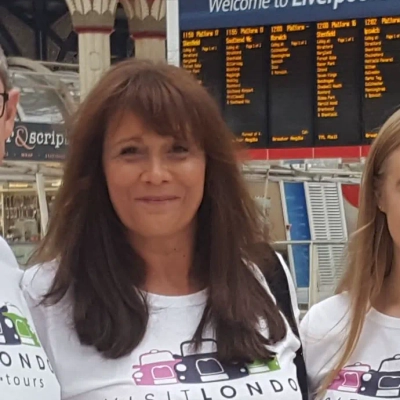 Cheryl CullenManaging Director · Visit London Taxi Tours LTD
The boundary I will not cross is making a tour sound right for someone when I know it probably is not.
As a small business owner, of course I want people to book with us. But long-term trust matters more than pushing the wrong sale. If a guest's timing is unrealistic, if they are trying to fit too much into a short window, or if a different option would give them a better day, I would rather be honest.
In tourism, it is very easy to oversell. You can make everything sound possible, especially in a city like London where people arrive with huge expectations. But credibility comes from saying, "This is what will work well," and also, "This part may not be the best use of your time."
For Visit London Taxi Tours, advocacy means explaining why our private London taxi tours can be brilliant, but truthfulness means being clear about practical limits such as traffic, attraction queues, timing, mobility needs or luggage.
My view is simple: a guest who feels honestly advised is more valuable than a booking won by overpromising.
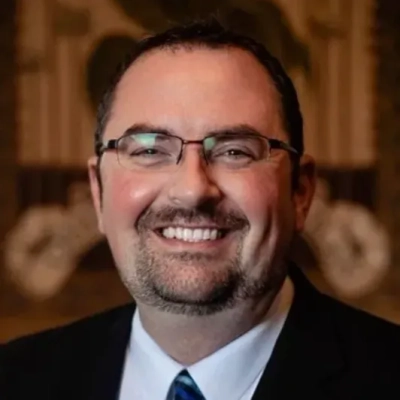 Wayne LowryExecutive Director / CEO · Sunny Glen Children's Home
Honesty is the absolute foundation of effective advocacy. When you represent an organization dedicated to vulnerable lives, your word is everything. At Sunny Glen Children's Home, we've spent over 90 years protecting and serving more than 25,000 children in the Rio Grande Valley. We balance advocacy with truth by letting the real, unvarnished impact of our work speak for itself. We don't need to inflate statistics or dramatize situations because the reality of healing is already deeply moving. Whether we are discussing our residential services in San Benito or the transitional support we offer young adults at the Allen House, we share our successes and our challenges with equal transparency. Building credibility means you show the hard days alongside the triumphs.
The one boundary I will never cross is exploiting a child's personal trauma for promotional gain. It's incredibly tempting in the non-profit sector to use the rawest details of abuse or neglect to pull at heartstrings and drive donations. Doing so violates the safety and trust we promise to rebuild. Instead, we focus on the journey of restoration and holistic growth. We talk about the resilience of the children and the professional counseling support provided at our Poenisch Counseling Center without revealing sensitive, private details that could compromise a child's dignity. Our supporters trust us because we respect the children we serve. By keeping our messaging focused on hope and future potential rather than past pain, we preserve both our credibility and the emotional safety of our kids. That is how you build a lasting legacy of care.
 Rina GutierrezPart-time Marketing Coordinator · Doggie Park Near Me
Balancing brand advocacy with absolute truthfulness isn't a tightrope walk; it's the foundation of everything we build. At Doggie Park Near Me, we've learned that advocacy and credibility are the exact same thing when your mission is helping people. When Lacey and Auggie founded this platform, it was because they struggled to find reliable details about park fencing and water access. Today, we provide a searchable database of over 6,300 dog parks across all 50 states, offering detailed reviews from both a human and canine perspective. We advocate for our directory by being the most reliable resource out there, which means we can't afford to sugarcoat the realities of any location we list.
The absolute boundary we won't cross is publishing unchecked or polished information that compromises safety. If a park lacks secure fencing or clean water, we state it plainly. We won't edit a user review or hide a park's flaws to please a business or secure a partnership. Even when park owners use our "Claim Your Park" service, they manage their listing details, but they never get to erase honest feedback from our community. We believe that protecting dogs comes before protecting any brand's reputation.
We build trust through clear communication and thorough research before sharing guidance on Auggie's Blog. Dog owners trust us with their pets' safety, and we take that responsibility seriously. If we lose that trust, our advocacy means nothing. By maintaining strict standards, we prove that standing up for our users is the best way to advocate for our business. Honest reviews keep dogs safe, and keeping dogs safe is our entire purpose. We won't compromise on that, period.
 Fahad KhanDigital Marketing Manager · Ubuy Peru
The boundary I won't cross is presenting something as a customer's independent opinion when it was substantially shaped by us.
This came up directly a few years ago. We'd worked with a customer on a case study, and during review, their quotes came back fairly flat — accurate, positive enough, but not quotable in the punchy way that case studies usually want. Someone on our team rewrote the quotes to be more compelling, sent them back for "approval," and the customer, busy and not particularly invested in the wording, just said it looked fine.
The case study went out with language that read as enthusiastic, specific, almost evangelical, attributed directly to that person.
A few months later, that customer casually mentioned to someone on our team that a colleague had asked about something specific in "their" quote, and they hadn't known how to answer because they didn't actually remember saying it or really believing it that strongly.
Nothing dramatic happened from this. The customer wasn't upset, exactly. But I remember feeling genuinely uncomfortable that we'd put words in someone's mouth that they then had to either own or quietly not own, in a conversation with their own colleague, because of something we'd written for our benefit.
Since then, the rule I hold is that anything attributed to a real person, in their voice, has to be something they'd say if asked the question cold, without our draft in front of them. We can ask better questions to get better quotes. We can't write the quote and ask them to approve it as if it were theirs.
It's slower. Some case studies are less punchy than they could be. But nobody we work with ends up in a conversation where they're explaining words that were never really theirs.
 Kevin LourdFounder · Distribute.you
Balancing advocacy for Distribute with maintaining credibility usually comes down to how we handle our outbound outreach. A few months ago, we ran a digital PR sequence using AI to match our raw product updates to media lists and draft the pitches. The raw output was flawless. The grammar was perfect, the tone was polite, and it included neat concluding sentences.
Our conversion rate for booked media placements on those emails was a flat zero percent. The copy was so flawlessly polite that journalists and spam filters immediately flagged it as a bot, and our domain started getting blacklisted. We completely lost our credibility by trying to sound perfectly professional.
Because of that, the one boundary we won't cross anymore is sending perfectly symmetrical, polished outbound copy.
That single change took our reply rate from zero to consistently clearing spam filters and booking the media placements we needed. We realized that flawless copy doesn't signal professionalism anymore—it just signals automation. For us, maintaining truthfulness means never letting a system mask a raw process with artificial polish. A little bit of grammatical messiness proves a human was actually involved.
 Neill David WatsonFounder · APMZEE
I'm the founder of a direct-to-consumer supplement brand, which is a category where the temptation to overclaim is everywhere, so this question sits right at the centre of how I run things.
The balance for me comes from accepting that credibility is the actual asset, not the marketing. In a space crowded with bold promises, the brands people come back to are the ones that sounded measured when everyone else sounded miraculous. So my advocacy is enthusiastic about what the product is squarely for, energy, recovery, staying active as you age, and deliberately quiet where the evidence is thin. Saying less, but only saying things I can stand behind, builds more trust than a louder claim that a sharp customer can see through.
The boundary I won't cross is implying a supplement treats, prevents or cures any medical condition. I'm a founder, not a clinician, and the moment a brand in my category crosses from lifestyle benefit into medical promise, it's both misleading the customer and, frankly, breaking the rules that exist for good reason. I would rather lose a sale than make a health claim I can't defend, because a single overreach like that can undo months of carefully earned trust, and in a business where more than half of revenue depends on people reordering, trust is the whole economic model.
The thing I keep coming back to is that in any category built on belief, the truth is the long game. Overclaim and you win the first order and lose the customer.
 Reid BreitmanPersonal Injury Lawyer · Kuzyk Law Personal Injury & Car Accident Lawyers
The best advocacy is built like a sound case, with verified facts, consistent language, and enough humility to admit what is not yet known. That approach protects credibility because it avoids the trap of saying something memorable that cannot later be defended. I have found that disciplined honesty is often more persuasive than aggressive certainty, especially when emotions are already running high.
One boundary I will not cross is attacking an opponent personally to strengthen a narrative. Personal caricatures may energize an audience, but they usually distract from the evidence and erode professionalism. Advocacy should elevate the facts, not rely on character theater.