
How Do You Select Which Stories Are Worth Telling on Social Media?
Choosing the right stories for social media can make or break audience engagement, yet many brands struggle to separate compelling content from noise. This article gathers proven strategies from industry experts who have mastered the art of selecting stories that resonate and drive action. These twenty-four approaches offer practical frameworks for identifying which narratives deserve a platform and which should be left behind.
Feature Unvarnished Customer Proof
HI PR Thrive,
The one criterion I use is whether the story shows a real customer experience in an everyday setting. Not a polished edit, but actual proof of the product working in someone's real life. Routers in awkward corners, cables across rooms, a customer explaining what failed before it worked.
I evaluate authenticity by how specific the details are and how unforced the comments become. When people respond with their own setups instead of just reacting, the story is working. In campaigns where we combined customer content with brand material, we saw a 20 to 30% lift in engagement and a 10 to 15% lift in conversion. Those are the stories worth telling.
Laviet Joaquin
Head of Marketing, TP-Link Philippines
https://www.tp-link.com/ph/

Prioritize Spontaneity and Personal Truth
I select stories worth telling on social media by prioritising spontaneity and personal truth, as they drive the highest authenticity perceptions. Research shows that stories generate slightly higher authenticity than polished Posts due to their ephemerality, fostering genuine self-presentation without overthinking audience response. I evaluate a story's fit for my audience using repeat engagement metrics like sentiment analysis of comments, time spent on long-form content, and community referrals, which reveal deeper connections beyond likes.
86% of consumers prioritise authenticity when choosing brands, per Stackla's study, so I test stories against real experiences that reflect shared values. For instance, I gauge resonance through direct feedback surveys and personal context in shares, ensuring emotional investment. This approach yields 70% higher engagement from relatable narratives, building trust as audiences crave unfiltered glimpses over generic polish. By focusing on these data-backed signals, my content consistently feels human and magnetic.

Solve Real Resident Problems First
My criterion is simple: does this story solve a real problem a resident already has? I manage marketing for properties like The Rosie in Chicago's Pilsen neighborhood, so I see what questions actually come up -- things like how to submit a maintenance request or what the move-in process looks like.
That resident-first lens is what makes content feel authentic rather than promotional. When we noticed new residents were repeatedly confused about basic appliance use, we didn't post a glossy brand video -- we created practical FAQ content that directly addressed the friction point. The story earned trust because it was useful, not because it was polished.
The authenticity test I run is: would a current resident share this with a friend who's considering moving in? If the answer is yes, it's worth telling. Content about our ORI expandable studios passes that test easily -- it's genuinely surprising and solves a real space problem people in Chicago face.
If a story only flatters the brand, cut it. If it makes someone's life marginally easier or shows them something they didn't know existed, post it.

Act as a Consumer Advocate
I use a very specific filter for our social media content. I ask myself if the situation could cost a regular buyer ten grand if they missed it. On my radio show and in our real estate office, we see people almost walk into financial traps weekly. I actively look for the deals that nearly blew up. Maybe we found a hidden property lien or caught a predatory lender slipping junk fees into the final paperwork.
Authenticity happens naturally when you act as a consumer advocate instead of a marketer. If I share a polished story about a smooth closing, people scroll past it. It sounds like an ad.
But when I pull out my phone right after a tense negotiation to explain exactly how we protected a client from getting burned, the audience leans in. They can hear the adrenaline and frustration in my voice. That raw reaction guarantees the story is real and actually protects the next buyer.

Seek Grit Under True Pressure
Social media audiences know a confected narrative when they see it, and they usually scroll right past. That's why the criterion we apply is 'grit'. We look for moments where things don't go to plan, and the emotional stakes are high. A good social media story is one where the equilibrium is threatened, and human ingenuity is needed to save the day.
We're looking for the moment of doubt when the risk of failure is real. Why do readers love these stories? Because they see a version of us working at our best, feeling the fear of disaster but digging in and finding a way to overcome it. It might be as small as dropping coffee down your shirt right before your presentation, or as big as scrapping a PR campaign at midnight because the tone felt wrong. If the presence of grit is evident, there's an excellent chance the story will land.

Align with Voice and Human Soul
One key criterion I use to select stories is whether they align with our brand voice and the needs of our audience. I often begin by using AI to build structure or draft angles, but human input is non-negotiable. Every draft is reviewed through the lens of tone, context, and brand voice. That final pass is done by someone who understands the audience, and that is what makes the content feel real rather than robotic. In review we explicitly ask whether the story reflects genuine context and whether it would naturally belong in our feed. Using AI for speed and humans for soul keeps our selection focused and authentic, and helps the stories we publish resonate with the audience.

Elevate Hyperlocal People and Places
At Latitude Park, I've spent over a decade scaling franchises by balancing corporate strategy with local relevance. My primary criterion for a story is "Local Specificity"--it must feature a real person or a neighborhood-specific event, like highlighting a technician who has been fixing bikes in Boise for twenty years.
We used this approach for a national franchise with over 80 locations, replacing generic templated content with stories about local team bios and community involvement. This shift toward hyper-local narratives helped drive a 42% increase in organic traffic because it proved the brand was an active member of the community.
I evaluate authenticity by checking if the story addresses a regional reality, such as "how to prep your lawn for spring in Asheville" rather than a generic tip. Authenticity is instantly signaled by using real photos of your actual building and staff instead of "suspiciously generic" stock images of handshakes.
I recommend testing these localized stories on Meta platforms using Instagram Reels or video ads. These snackable, high-impact videos of local owners often provide a better ROI than polished national campaigns because they feel like a recommendation from a neighbor.

Lead with a Surprising Number
The criterion is simple: does this story contain a number that would surprise someone? On WhatAreTheBest.com every piece of content I share externally anchors on a specific, verifiable data point. "Google made 854 requests to my site in eight weeks while Bing made 26,000+" tells a story that surprises people and invites engagement. "I built a SaaS comparison platform" does not. The audience doesn't need to care about my business to find the data interesting — the Googlebot stat resonates with anyone in SEO. Authentic content isn't about vulnerability or personal narrative. It's about sharing real findings that make people stop scrolling because the number doesn't match their assumptions.
Albert Richer, Founder, WhatAreTheBest.com

Show Jobsite Work That Converts
As CEO of CI Web Group, I've crafted social media strategies for HVAC, plumbing, and garage door contractors that generate measurable leads through authentic content.
My key criterion: Does the story showcase a real job-site scenario with visuals of actual work? These cut through the scroll because they prove capability.
For a garage door client, posting on-site repair videos with before-and-after shots drove direct bookings--far better than generic stock images.
We test authenticity by including local details like city-specific headlines and trust badges, then checking metrics like click-through rates and website clicks to confirm homeowner resonance.

Drive Clear Next Steps Today
My #1 criterion: will this story create (or remove) a "next step" for the customer today--call, book, or request an estimate. If it can't be tied to a clear CTA, it's usually just content noise.
To test authenticity, I run it through a "jobsite proof" filter: could a real HVAC tech/plumber/roofer say this out loud at the counter without cringing. If the language feels like agency-speak, we rewrite it using the same words customers use in calls (symptoms, urgency, price anxiety), then we pair it with a simple action like "Free / No Contract / No Obligation" because that's what actually gets clicked.
Example: we'll post user-generated content like a before/after of a messy restoration job with a short caption that explains the homeowner problem + what we did + what to do next (call now vs schedule). People trust people, and social proof beats us "saying we're great" every time.
I evaluate it the same way I evaluate campaigns at Foxxr: did it drive the right on-site behavior. I'm looking at traffic source + engagement KPIs + conversion rate, and if it doesn't move conversions, we stop telling that kind of story and test a new angle.

Reveal Identity Through Specific Episodes
My single criterion: does this story reveal something about *who we are* as a company, not just what we do. Anyone can post a case study. Fewer brands will show the uncomfortable moments--the client who came to us after a bad agency experience, the campaign that needed a complete pivot mid-way through.
At Zen, we've found that B2B audiences on LinkedIn respond completely differently to polished announcements versus honest behind-the-scenes narratives. When we shared how we rebuilt a client's entire online PR strategy after their previous link-building approach actually *hurt* their rankings, that story generated real conversation--because it named something people privately worry about but rarely see addressed openly.
The authenticity test I use is simple: could this story exist without us in it? If the answer is yes, it's generic content. A story worth telling should only make sense coming from your specific team, with your specific client, in your specific context. That specificity is what makes audiences feel like they're getting access to something real.
Strip the marketing voice entirely when you draft it. If it reads like a press release, rewrite it like you're explaining what happened to someone over coffee. That gap between those two versions is usually where the authenticity lives.

Shift Decisions with Defensible Values
I pick stories with one criterion: it has to *change the customer's decision-making* (reduce a real objection, build trust, or clarify what joining the brand says about them). If it won't move someone from "cool" to "I get it / I want it," it's not worth the feed space.
My authenticity test is: can I tie the story to a specific value I'll defend even when it costs me time or money? If I can't name the value and the tradeoff, it's usually just content. I learned that from building Flex Watches--people didn't share us because of watch bands, they shared the mission and what it signaled about them.
Example: when I'm advising DTC brands through Trav Brand, founder-led ads and posts beat product-only posts because the story pre-handles the skeptical questions ("why you," "why now," "why this price") before the customer has to ask. If the founder can say it plainly on camera the same way they'd say it to a friend, it lands; if it needs buzzwords, the audience smells the performance.

Tap Unspoken Emotions and Respect Context
One criterion I keep coming back to: does this story connect to something your audience is already feeling, even if they haven't said it out loud yet? That emotional resonance is what separates content people scroll past from content they stop and share.
At CC&A, we've seen this play out clearly when clients tap into trending topics or cultural moments that mirror what their audience is privately processing. The story doesn't have to be about the trend itself -- it just has to borrow that emotional energy and redirect it toward something real your brand has actually lived.
For the authenticity test, I ask: would your audience feel tricked if they later learned more context? If yes, the story needs reshaping. Authentic content holds up under scrutiny because it's rooted in something that genuinely happened, not something engineered to perform.
The platform also changes everything here. What feels authentic on Instagram can feel tone-deaf on LinkedIn, where the algorithm now actively rewards specific expertise over broad appeal. A story worth telling on LinkedIn needs to demonstrate your actual knowledge, not just your personality.
Translate Facts into Actionable Empathy
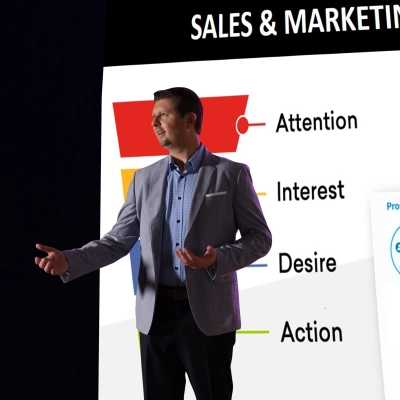
With my decade at Northrop Grumman honing competitive intelligence frameworks and now leading Technology Aloha's strategies for nonprofits in food security and animal welfare, I pick stories that translate facts into empathy to inspire action.
I evaluate authenticity by checking if the story reveals real people or purpose-driven struggles, aligning with audience values like trust and originality--millennials especially tune out anything feeling like "fake ads or lazy sales writing."
For instance, we advised a food security nonprofit to share recipient stories of families overcoming hunger, hooking with a personal conflict then ending in hope via small donor steps, which boosted millennial engagement.
Another is elevating environmental causes by personalizing data into narratives of impacted lives, ensuring it feels like a genuine connection rather than stats alone.

Favor Enduring Journalistic Significance
Choosing an authentic story involves having a long-term view; whether the story you choose will have lasting significance and provide value beyond a short-lived trend.
While social media can serve as a dumping ground for "noise", the most impactful stories are the ones that could appear in a prominent magazine or newspaper.
The way in which we determine our own level of authenticity is based on how much we would like to see this story highlighted as a feature article for our company.
We should also filter all of our social media content through a journalistic lens to ensure each and every one of these posts is designed to establish us as authorities within our field, and to help us create awareness about who we are, versus creating an immediate reaction that has no relevance down the line.

Post What Truly Moves You
I'm Runbo Li, Co-founder & CEO at Magic Hour.
The only criterion that matters is whether the story made you feel something before you decided to post it. Not "will this perform well." Not "does this fit our content calendar." Did it genuinely hit you emotionally, make you laugh, surprise you, or change how you think about something? If yes, post it. If you're manufacturing the feeling, your audience will smell it instantly.
I call this the "would I send this to a friend" test. Before I post anything, I ask myself: would I text this to someone I actually care about, unprompted, just because I thought they'd find it interesting? That filter kills about 70% of what most brands put out. And it should.
Here's a real example. Early on, I was making AI video edits and posting them daily. One night I made an NBA highlight reel using AI stylization. It wasn't strategic. I just thought it looked incredible and I was genuinely excited about it. I posted it because I would have shown it to any friend who walked into the room. That single video reached millions of people. Mark Cuban saw it, became a paying customer, and the Dallas Mavericks reached out to us organically. None of that happened because I optimized for an algorithm. It happened because the excitement was real and people could feel it.
The authenticity question is simpler than people make it. Your audience doesn't evaluate whether a story is "authentic" through some checklist. They evaluate it the way humans have always evaluated sincerity: through specificity. Vague, polished, corporate stories feel fake because they are fake. Specific, messy, detailed stories feel real because they are real. Tell me the exact moment something clicked. Tell me what went wrong before it went right. Tell me the number, the name, the day of the week.
Stop asking "will my audience find this authentic?" and start asking "am I actually feeling something right now?" The audience is just a mirror. If you're performing, they see a performance. If you're sharing something that genuinely moved you, they feel it too. Authenticity isn't a strategy. It's the absence of one.

Tie Narratives to Measurable Action
I run one criterion: can I tie the story to a measurable behavior I can optimize--search intent, a landing-page drop-off, or an ad comment pattern--so it's not "content for content's sake." I've owned an agency and built acquisition systems across paid social/search + SEO, so I'm always looking for stories that move someone one step down-funnel in a way we can validate.
To check authenticity, I use an "honesty filter": does the story include a real constraint, tradeoff, or boundary that we'd still stand behind if we had to defend it in the comments? If it's only upside, it reads like an ad; if it includes what we *won't* recommend, it lands as real (and usually performs better because it builds trust).
Example: when we're running Meta/Google and see repeated objections ("why is this expensive / why should I trust you"), I'll greenlight a story that shows the testing framework--what we tried, what failed, and what we changed--paired with the UX/UI fix that reduced friction. It's performance-accountable, not vibes.
Same with SEO content: if a post can't be written like a one-on-one conversation and supported with relevant outbound/internal links (not link spam), it's not a story worth telling. The authentic version is the one that helps the reader make a better decision, even if it means saying "this isn't for everyone."

Unite Insight and Firm Direction
I choose stories that reflect a clear customer insight and that leadership can get behind. When leadership lacks direction, content becomes broad and forgettable, so I use that as a key filter. To evaluate authenticity I check whether the narrative matches what customers care about and whether the core message can be stated confidently by leadership. If the story feels generic or the why is unclear, I pass on it.

Reduce Uncertainty with Verifiable Transparency
One criterion I consistently use is whether the story reduces uncertainty for the audience. If a piece of content helps people better understand a situation, a risk, or a decision — it's worth telling. Stories that simply "look good" but don't solve a cognitive gap rarely perform sustainably.
Globally, this aligns with audience behavior. According to Edelman's Trust Barometer, 63% of people say trust in a brand depends on its ability to communicate transparently and help them navigate uncertainty. That's a strong signal: utility builds trust more than aesthetics.
To evaluate authenticity, I look at three things.
First, verifiability. If a claim can't be backed by data, cases, or real outcomes, it will eventually erode trust. For example, in reputation management, we often test narratives against real search results and sentiment data before publishing.
Second, consistency with prior communication. Audiences detect tone shifts instantly. A brand that suddenly changes its voice or positioning for the sake of a "story" often triggers skepticism rather than engagement.
Third, early audience signals. Even on a small scale, you can test authenticity through micro-engagement — comments, saves, or qualitative feedback. According to Sprout Social, 76% of users say they would stop following a brand if content feels inauthentic or forced.
In practice, the most effective stories are not the most polished ones, but the most explainable and grounded. Transparency consistently outperforms overproduction.

Demonstrate Prepared and Professional Moments
My #1 criterion is: can the story show "timeliness, safety, and excellence" without me saying those words. In chauffeured transportation, people don't trust slogans; they trust a specific moment that proves we were prepared and professional.
To check authenticity, I ask whether the customer would recognize themselves in it and say "yep, that's exactly how it went." If the story requires exaggeration, perfect-looking photos, or skipping the messy logistics (traffic, timing, terminal coordination), it won't land with a Seattle-Tacoma audience.
Example: our SeaTac Meet & Greet stories work because they're concrete--chauffeur inside the terminal, helping with bags, door-to-door, no wait time. That's relatable for business travelers and families, and it matches what we actually do every day.
Second example: special events content only makes the cut if it includes coordination details--scheduled pickups, multiple stops, and the chauffeur staying flexible while keeping things on time. That's the unglamorous part people care about, and it's why the story feels real instead of "just another limo post."
Expose Expectation Gaps and Integrity
One criterion I use: does the story show the *gap* between what a homeowner expected and what actually happened -- and did we close that gap with integrity?
After 15+ years working alongside builders across the country, I've seen how fast trust erodes when contractors overpromise. So the stories worth telling are the ones where we had a hard conversation -- like explaining to a client why their quote from another builder was missing key site-specific engineering -- and still earned their business because we were straight with them.
The authenticity check is simple: would I be comfortable defending every word of that story in the comments? If the story makes us look good by leaving something out, it fails that test. Real stories include the friction.
For example, the "30 Under 40" recognition was worth sharing not because of the award itself, but because the story behind it -- building a low-volume, quality-first firm in a race-to-the-bottom industry -- is something our clients already know to be true about us. The award just gave us a reason to say it out loud.

Break Patterns with Candid Trial Prep
As COO of an agency that has won multiple Golden Gavel awards, I filter every story through the "pattern interrupt" lens to avoid the sea of sameness. If a story looks like a traditional blue-suit-and-gavel billboard, it becomes a "conversion killer" because the audience's brain is conditioned to ignore it.
I prioritize stories that capture the "grit" of trial preparation or "Day in the Life" content rather than using generic stock photos of people shaking hands. For example, we replace text-heavy pages with cinematic brand films that show a lead attorney's passion, which triggers a psychological bond that a standard template cannot replicate.
Authenticity is evaluated by whether the content provides a human-centric design that lowers a lead's stress during a high-stakes crisis. We focus on showing the real office environment and genuine staff interactions, ensuring the firm is perceived as a relatable "legal champion" rather than a boring, sterile vendor.

Pass the Screenshot Share Test
The one criterion I use at Doggie Park Near Me to decide if a story is worth telling on social media is what I call the screenshot test: would someone screenshot this post and send it to a friend? If the answer is no, it does not get posted.
This filter works because it forces us to evaluate whether a story has genuine share value rather than just brand value. A post about our updated park hours fails the test. A post about a three-legged rescue dog named Captain who found his forever family at one of our featured parks passes it instantly. Both contain useful information about our brand, but only one makes someone stop scrolling and think of a specific person they want to share it with.
To evaluate authenticity specifically, I ask whether the story existed before we decided to tell it. If we have to manufacture the moment or stage the content, our audience will feel that. The stories that perform best for us are ones we simply witnessed and documented. A dog owner tearing up when their anxious rescue finally played with another dog at the park. A regular visitor who brings homemade treats for every dog on Saturday mornings. These moments happened whether we posted about them or not, and that is exactly what makes them feel real.
We also gut-check every story against one question: could a competitor tell this same story? If yes, it is generic and we skip it. Our audience follows us specifically because we know individual parks, individual dogs, and individual communities. The stories that only we can tell are the ones worth telling.

Highlight Lessons the Community Taught
My filter is counterintuitive. I skip the stories where we're the hero. When I'm deciding what to post for Abogados Now, I look for moments where the community taught us something we didn't know. A client once told us our intake script sounded robotic and unrelatable, like nobody who wrote it had ever called a lawyer while scared. That feedback reshaped how we train law firms on phone intake. That's the story I posted, not the conversion lift that came after.
So the criterion is pretty simple. If a story positions us as the expert handing down wisdom, I cut it. If it shows a real person from the community correcting us, pushing us, or revealing a blind spot we had, that's what I publish.
Our audience can tell the difference between a brand performing humility and a brand that actually got humbled. The second one builds the kind of trust that turns followers into signed cases.