

Choose Silence When Relevance Fails
 Vaibhav KakkarFounder and Group CEO · Digital Web Solutions
We found that AI is less helpful when deciding whether to join a conversation. It naturally generates ideas, angles, and responses, which makes every trend seem worth discussing. That can create the false impression that every topic needs a brand perspective. In reality, some moments deserve silence because the connection is weak or the focus belongs.
We learned that restraint is one of the strongest public relations skills we can practice. Real credibility grows when we speak with useful evidence, genuine experience, and clear purpose. AI makes participation easier, but it cannot decide whether our voice truly belongs in discussions. We build lasting trust by knowing when thoughtful silence serves the audience better than visibility.
Add Context That Makes Quotes Memorable
 Christopher PappasFounder · eLearning Industry Inc
AI has become less effective at finding the single detail that turns a broad PR comment into a memorable quote. It often suggests familiar ideas about innovation, efficiency, or transformation. Those points may be true, but they rarely help one source stand apart. Journalists usually remember the quote that feels specific and useful.
We treat AI output as a starting point instead of the final draft. We remove any sentence that could describe almost any executive without adding real value. We add one clear observation, one balanced opinion, and one practical takeaway for readers. That simple review creates stronger quotes because it values real context over polished but general language.
Study Journalists to Select Odd Angles
 Ihor Lavrenenko M.S.Founder · Smarfle CRM
The place AI has proven least helpful in our PR work is judging which story angle a specific reporter will actually want, versus which angle sounds objectively strongest. We tried using AI to draft pitch angles ranked by predicted appeal, and it consistently ranked the most comprehensive, data-heavy angle highest. Reporters we actually pitched almost never picked that one. They picked the narrower, odder angle with one surprising detail, the kind of thing a model trained to sound thorough tends to undersell.
What that taught us is that AI is good at pattern-matching what a strong pitch looks like in general, and bad at predicting what a specific tired, over-pitched human wants in their inbox this week. Reporter preference is idiosyncratic and often contrarian in ways that don't show up in any training pattern, a reporter who's covered five AI stories this month wants the one pitch that isn't about AI, and no model ranking angles by general strength would ever surface that. We still use AI heavily for research and drafting, but angle selection for a specific reporter stayed a human judgment call, built from actually reading that reporter's last ten pieces rather than asking a model what a good pitch looks like in the abstract.
Create Visits That Earn Coverage
 Aviad FaruzOwner · FARUZO Jewelry
I run three event venues in Jerusalem as well as FARUZO, and the part of PR where I find AI least helpful is giving someone a real reason to write about us. For the venues, I invited guests who were also bloggers to write about their visits. They had firsthand material, and those experiences became content and backlink sources. AI can help with wording, but it cannot supply that visit or the guest's observations. The lesson I take from this is to improve what there is to report before polishing the pitch. A better-written request is still weak if the writer has nothing specific to describe.
Verify Each Media Contact

The place AI disappointed us in PR work was media list building. We asked an assistant to find journalists covering hospitality in the Gulf for a hotel client's opening. It returned a tidy list with names, outlets and beats that looked exactly right. When a team member checked the first five, two of the people did not exist at those outlets, and one had changed beats two years earlier. The outlets were real, the roles were plausible, the humans were invented or stale.
What that taught me is that these tools are strong at form and weak at facts they cannot look up at the moment you ask. A media list is nothing but facts that change monthly. Since then the rule is that AI may draft the structure of a pitch or summarise an outlet's recent coverage from pages we hand it, and every name on a list comes from a human opening the outlet's site or a recent byline that day.
The broader limit is that PR is about knowing what someone wrote last week and why they would care this week. The tool does not know last week unless you give it last week. Once we started feeding it three recent articles from the journalist before asking for an angle, the drafts became usable. Left on its own it wrote to a journalist who does not exist about an angle nobody covers.
Preserve Vivid Details in Pitches
 Joe SpisakCEO · Fulfill.com
I tried using AI to write press releases when we were scaling ShipDaddy and it was a disaster. The copy was technically correct but completely soulless. Journalists could smell it from a mile away and our open rates tanked.
Here's what broke: AI can't capture the weird specific details that make a story interesting. When I sold my fulfillment company at 28, the hook wasn't "successful entrepreneur exits logistics business." It was "guy who started a company in a literal morgue builds 140,000 square foot facility and exits for eight figures." AI would sanitize that. It would say something generic about "unconventional beginnings" instead of just saying I was literally shipping packages from a building where they used to store dead bodies.
The other place AI falls flat is relationship context. When I'm pitching a story about Fulfill.com connecting brands with 3PLs, I know which journalists have covered supply chain nightmares during COVID, who's interested in marketplace business models, and who loves founder comeback stories. AI can't read a reporter's last six months of articles and understand what angle will actually resonate with them personally. It'll generate a template that could go to anyone.
What this taught me is that AI is a research assistant, not a writer. I use it now to pull data, find stat comparisons, or draft outline structures. But the actual pitch? That's all human. The subject line, the opening hook, the specific example that makes a journalist lean in - you can't automate that without losing what makes it work.
The best PR is storytelling and storytelling requires judgment about what details matter. AI doesn't know that the morgue detail is gold while my college major is irrelevant. It treats all facts equally. Humans know which facts have texture.
Audit Placements for Repeated Templates
 Andrew IzrailoSenior Corporate and Fiduciary Manager · Astra Trust
Where AI disappointed me was in placed content. When I audited our link building, I found that one vendor was publishing across unrelated domains using what was plainly the same AI-generated template. Each article, read on its own, was passable. Read side by side, they formed a pattern anyone could spot.
That is the limitation I hadn't expected. AI is very good at producing something acceptable at volume, and volume is exactly what makes it visible. A human writer placing ten articles produces ten different pieces. A template produces one piece ten times, and the footprint builds up with every placement, attached to the sites being linked to. In a regulated field like offshore corporate services, where credibility is most of what you are selling, that is a cumulative risk rather than a saving.
It changed how I judge any PR or content work that arrives quickly and cheaply. I now read the vendor's placements as a set, not one at a time, and ask whether the same voice turns up on sites that have nothing else in common.
AI can draft. It can't give you a reason for an editor to care, and it can't make ten sites sound like ten different people.
Find the Story Worth Telling
 Sharifah HardieBusiness Consultant · Ask Sharifah
One area where AI has proven less helpful than I initially expected is coming up with the actual PR angle or, as we call it in PR, the "spin."
AI is incredibly helpful once I know the story I want to tell. It can help me organize my thoughts, improve the writing, tighten a pitch, create different versions and make sure the story is communicated clearly.
But I still have to recognize what the story is.
I have to look at a company, person, product or situation and figure out what makes it interesting. Why would a journalist care? Why would their audience care? What is happening in the world right now that makes this relevant? What is the angle that turns ordinary company information into an actual story?
AI can certainly suggest ideas, but I have found that the strongest PR angles still come from understanding the client, understanding people and recognizing opportunities that aren't always obvious from the information sitting in front of you.
That taught me something important about AI's limitations: AI can help me tell the story, but I still need the human instinct to recognize the story worth telling.
In PR, that instinct is often where the real value is.
Reject Announcements That Lack Value
 Sahil AgrawalFounder · Head of Marketing, Qubit Capital
Have you ever had a tool tell you your announcement was not worth anyone's time? The writing was never where it fell over. We chase investors on behalf of early-stage founders, so there is a steady supply of things we could announce. I started putting drafts in front of a model and asking one question, which was whether a journalist would care. It said yes 11 times out of 11. Some of those were genuinely nothing, a hire, a page redesign, a partnership that was really a logo swap.
A person who tells me an announcement is dull is risking something small by saying it. The model is not risking anything, so it never says it. Judgment might just be that. The logo swap went live on a Friday afternoon.
Apply Taste to Every Message
 Jason LevinCEO/Founder · Memelord.com
AI is bad at the part of PR that sounds obvious until you try to automate it: taste. It can turn a real story into beige soup, invent confidence, and miss why a moment matters. I use it for first drafts, trend scanning, and cleanup. A human still has to decide what is true, sharp, and worth a reporter's time.
That is the same rule we use at Memelord.com. Our marketing team of 4 uses AI trending meme alerts, but nobody lets the tool decide whether a meme is actually funny. Speed is cheap. Judgment is the moat.
Build Authentic Voice From Evidence
 Aigars PilmanisFounder · VolRadar
AI proved least helpful at the part journalists actually read: the voice. I run VolRadar, a bootstrapped options analytics platform, and our media pitching runs through expert-request platforms. One of them shows reporters an AI-detection score on every pitch. Our AI-drafted pitches were flagged as fully AI-written, and running them through a humanizer tool didn't move the score; the rewritten text also read worse. Where AI does help is triage: sorting hundreds of open requests and filtering out the ones we can't answer honestly. The lesson is that polish can't be bolted on afterwards. If a pitch doesn't start from a specific, checkable fact of your own, no rewriting pass will make it sound like a person.
Confirm Pegs Against Current Sources
 Christopher CoussonsDirector · Visionary Marketing
The PR task where AI looked sharp and still failed our human gate was journalist outreach. A model drafted a tidy pitch for a UK trade title, complete with a news peg and a flattering opener that sounded like we knew the reporter. On a cold read it passed. Then we checked the peg against that week's edition and found the angle was invented: a product claim we had never verified, plus a personal detail about the journalist's last piece that was wrong. Tone was off too, slightly salesy where that desk prefers a short factual ask. We killed the send.
The rule we use now is simple. AI may draft structure and a first pass of facts we already hold in a source sheet. A senior still confirms the peg against a live story, strips invented personal colour, and rewrites the opening in our own voice before anything leaves. In AI Content Performance Statistics 2026 at https://visionary-marketing.co.uk/blog/ai-content-performance-statistics-2026 AI-only articles ranked 27 percent lower than human-written ones across a 1,400-article paired test, while hybrid drafts recovered most of that gap. Outreach follows the same pattern. Fluency without a human gate is how you burn a reporter and the next ask.
Rely on Established Trend Tools
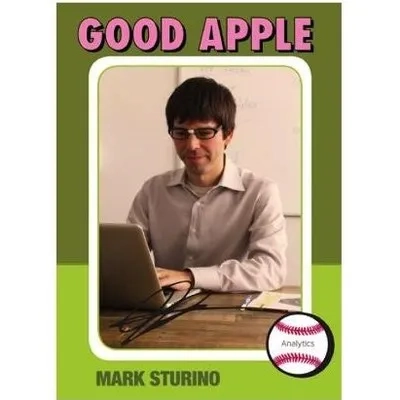 Mark SturinoVP of Data & Analytics · Good Apple
One area where AI tools haven't made much of a difference for us is in our trend and keyword tracking. We have some existing pre-AI tools that can flag some useful mentions and stories from key outlets, but we expected AI to be able to better identify opportunities we hadn't found or offer some useful insights into angles to take. None of that has really materialized. Its suggestions are mostly all over the place and not materially better than earlier tools.
Calibrate Crisis Tone Through Experience
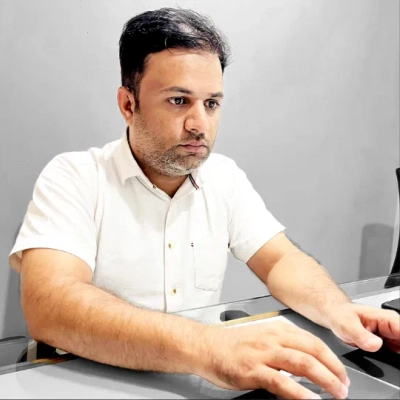 Fahad KhanDigital Marketing Manager · Ubuy Kuwait
Crisis statement drafting proved less helpful than expected, even though AI had handled routine press releases competently in similar formats before.
During an actual incident requiring a public statement, AI-generated drafts were factually accurate and grammatically appropriate but consistently miscalibrated in tone, sometimes reading as clinically detached when warmth was needed, and other times overly apologetic when the situation required measured confidence instead.
To test this directly, I asked for statements addressing the same incident with different tone instructions, and even with explicit guidance, the outputs lacked the situational judgment a person develops from navigating similar crises and understanding unstated stakeholder sensitivities.
The lesson was that crisis communication requires reading a specific moment's emotional register accurately, something built from lived experience with how situations feel rather than reconstructed from written patterns alone. AI could produce competent sentences. It couldn't reliably sense whether this particular moment called for restraint or visible concern, a distinction that matters enormously to how a statement actually lands.
Protect Rough Edges From Polish
 Chirag KulkarniFounder & CEO · Taco
We expected AI to uncover the detail that makes a corporate story believable consistently. Instead it often creates narratives that sound complete while hiding the useful rough edges. Those missing moments include failed experiments difficult decisions or real limits that changed direction. We found those details give reporters stronger reasons to trust the story from experience.
This taught us that polish and proof serve different purposes in communication every day. We first protect the inconvenient facts before asking AI to organize the narrative clearly. That keeps important context visible instead of replacing honest tension with perfect sounding language. Credibility grows when we explain what worked and why the easier path was rejected.
Match Care Text With Published Policies
 Anna EvansFounder · Interlinked Wellness
I now budget ten minutes after every batch of patient or partner copy, the same window we use after a 60-minute visit, because models still invent a second visit length or soften a deposit rule.
The rewrite is against The Functional Medicine Process: What to Expect at https://www.interlinkedwellness.com/process. Fluent drafts still get the $47 deposit or the Texas-during-appointment rule wrong. We do not send until a human matches the page. Accuracy is what protects the book path.
Compare Workflows With Public Pages
 Dane MaxwellFounder · Paperless Pipeline
AI summarization of a customer or PR story keeps flattening the operational nuance that makes the quote true, especially around how pricing and permissions work on the live file.
A draft once turned per-transaction billing and unlimited users into a vague "affordable platform" line and dropped the human-save gate on AI drafts. That version would have sailed into outreach and still been wrong on day one. The verification step we added is blunt: before any pitch leaves, a person opens the live public page and checks every numeral and workflow claim against it. For us that means Pricing or What's New, such as the 10 to 12 minutes down to 2 to 3 intake note on https://help.paperlesspipeline.com/help/-whats-new. Fluency is cheap. A mismatched field on a journalist's draft is expensive. Summaries propose. Operators confirm.
Invest Time in Media Relationships
 Matet VelascoPR Manager · Vinfluencer AI
Pitch personalization. That is the piece everyone assumed AI had solved, and in my experience it is where the gap is widest.
A model can read a reporter's last five articles and produce a paragraph that proves it read them. What it cannot tell you is whether that reporter is tired of the beat, whether they got burned by a company in your category last quarter, or whether the angle you are offering is the fourth version of it in their inbox this week. Those are the things that decide whether a pitch lands, and none of them are in the text. They live in the relationship, or in a five-minute conversation at a conference.
So what AI actually gave me was speed on the wrong axis. It made it cheap to produce a hundred competent, correct, slightly hollow pitches. Competent and hollow is a worse outcome than ten pitches that are obviously human and occasionally clumsy. Volume was never my constraint. Judgment was.
The limitation that taught me is specific, and I think about it a lot because I work at an AI company. Language models are excellent at pattern and terrible at stakes. They will match a tone perfectly and still not grasp that this particular email matters and that one does not. We build conversational virtual personas, and the same lesson shows up on the product side: what makes a conversation feel real to someone is not fluency, it is continuity and consequence, the sense that what you said last time actually changed something. Fluency is the easy half, and it is the half that fools you into thinking you are done.
Practical takeaway for anyone in PR: use AI for the research pass and the ugly first draft, then spend the hours you saved on the twenty relationships that actually produce coverage. Do not spend them sending more pitches.
Block Unsupported Product Promises
 Neill David WatsonFounder · APMZEE
When we spun press angles for APMZEE, AI was happy to draft lines that sounded like earned product claims. The overpromise showed up in ad and PR hooks that implied outcomes we had not earned yet. On a small DTC brand, that kind of fluency is dangerous because it reads finished before anyone has checked the claim.
What catches unearned language before send is a human claim gate after the model run. We ask ChatGPT for roughly 6 ad hooks, then a person on the small DTC team kills anything that overstates sleep, performance, or recovery relative to what we sell. Day-3 and day-24 post-purchase emails get the same gate. AI drafts volume; it does not own the risk of a claim that has not been earned.
Challenge Bias Through Independent Research

AI is polite and agreeable in a way that is not always useful. It validates your suspicions and tells you that you're right.
I did have one client once who I suspected was fabricated because the terms that were offered seemed too good to be true. I asked AI to do research on him and it confirmed my view. It backed up my suspicion with confident language.
I couldn't sleep that night. So I began to dig myself, properly, from scratch. I discovered that all was well, the client was true. I was just lucky to find such a client, and I nearly talked myself out of a good opportunity because a tool told me what I wanted to hear.
AI can't physically meet your client and read the room. Only it can see what you write and it reflects it back to you. There are times when you need to think for yourself and believe in what you've found and feel.
Ground Personal Accounts in Reality
 Richard MeadowsHead of Content · Streamrise
The biggest disappointment was first-hand experience. AI is good at producing a story that sounds like it happened to you. It is not good at knowing whether it did.
At Streamrise we use AI to help draft expert answers like this one. This week I went back through recent drafts that had already been sent and found the pattern. One answer described a sign-up form field where customers wrote "ChatGPT recommended you". We don't have that field, and we have no such data. Another said a research step was mandatory before every article. It wasn't. We published an article the same day without it. A third said I had checked 13 websites when I had checked 10. None of these were wild inventions. They were plausible, specific and confident, which is exactly why they got through.
I withdrew the three that were still in review and rewrote only the ones with a real story behind them. The rest I dropped.
What it taught me about AI's limits in PR: it has no memory of what your company actually did, so it fills that gap with what a company like yours would plausibly have done. In most writing that's harmless. In PR it is the one thing you cannot afford, because a journalist prints it as fact under a real person's name, and the first follow-up question exposes it.
The rule we work to now: any "we did" or "I did" in an answer has to match an item on a written list of things that really happened. If it doesn't, it becomes advice, not experience. If there's nothing real to say, we skip the question. We send fewer answers as a result, and every one of them is something I can defend on a phone call.
Trace Statements to Source Documents
 Nick SawinyhHead of Product & GTM · Veodyn
AI has been least useful for the part of PR that is knowing what actually happened.
I've used it heavily for pitching and for drafting expert commentary, and the failure is consistent: asked for a concrete example, it produces one. Asked for a number, it produces one. Neither is real. The draft reads well, the anecdote has the right shape, and none of it survives the question "did this happen?". Early on I caught a figure in a draft that had no source anywhere in my notes. It was plausible, it was specific, and it would have gone out under my name to an editor who might well have asked where it came from.
What that taught me is that AI is fast at the surface of PR and useless at its substance. The substance is a verified fact, an incident you were actually present for, a number you can trace. A model has none of those about you. It has the general shape of what people like you tend to say, and that's exactly the material a trade editor has learned to skim past.
So the rule I work to now is that every figure and every anecdote in a pitch has to trace to a document I own before the draft is allowed to keep it. The model can arrange words. It can't testify. And some platforms now show journalists an AI-likelihood score next to a pitch, which means fluent generic copy isn't just weak, it's flagged.
The honest limit of this lesson is that it makes AI far less of a time saver than the demos suggest. The checking is most of the work, and that's been true since before the models arrived.
Validate Expertise Against Request Criteria
 Heath SquierCMO | Founder · EVKII
The weak spot is deciding whether a source actually qualifies for a journalist's request. AI can produce a convincing connection between almost any business biography and a topic. That connection is not evidence that the person has the experience the reporter needs.
In our current earned-media workflow, a coffee topic can look relevant to a coffee retailer until the full brief asks specifically for a working barista. An AI operations request can look right for a founder using software agents, but the reporter may need someone deploying physical AI in a factory. A well-written response does not repair either mismatch.
The practical lesson is to separate matching from drafting. Before writing a pitch, check the reporter's requested role, the precise experience being sought, the deadline, and any restrictions on AI-assisted responses. Put the supporting fact beside each requirement. If the fact is missing, leave the opportunity unpitched rather than asking the model to make the biography sound closer.
AI is useful for extracting those requirements and organizing documented experience. It is less reliable when asked to turn topical similarity into professional qualification. The decision to skip a superficially attractive request is part of doing the work well; the number of polished drafts is not a useful substitute for qualified submissions.
Align Messages With Jar Language
 Emma RusbyDirector · Zenvy Beauty
A model flattened a leave-in pitch into glossy lines we would never print on the jar, including benefits our product page does not list and launch-day hype we refuse on the live PDP.
I now check every outbound pitch sentence against the jar copy and the journal URL before it leaves the desk. If the model invents a benefit, the line dies. In The UK Curl Report 2026: Britain's Curl Patterns Mapped, https://zenvy-beauty.com/blogs/news/uk-curl-report-2026, UK women spent £416 before finding a routine that works. Fluent copy that overclaims burns that trust faster than a blank page.
Evaluate Opportunities Beyond Keywords
 Matthias SchwakeFounder / Solopreneur · solonaut.ai
Where AI falls short for me is judging which journalist requests are actually worth answering. I scan outlets like Qwoted and Featured for opportunities relevant to AI automation and small business, and an AI-assisted first pass is good at surfacing anything containing the right keywords — but it can't reliably tell a genuine, specific request from a generic one dozens of people will also answer, or catch when a pitch would be tone-deaf for the publication. I still read every shortlisted request myself before drafting a response, because getting that judgment call wrong wastes the reporter's time and burns the relationship. What I learned: use AI to widen the funnel, never to make the final call on outreach — that still needs a human who knows the publication and the story.